



 Sign In
 My Designs
 Order History
 Tax Exemption
 Change Password
 Sign Out
 1-800-330-9622


Storefront signs & business branding
A storefront signage refresh can help customers recognize your business, find the entrance, and understand what is available. The planning starts with the customer’s view of the space: what is clear, what is outdated, and what is competing for attention?
Before replacing every sign, identify the messages that need attention and the display formats that suit them. This guide explains how to plan an update using custom signs, window graphics, banners, and sidewalk displays.
Review your storefront before designing replacements
Walk toward the business from the directions customers normally use. Check the view from the parking area, nearby walkway, and entrance. Repeat the review at relevant times of day to notice reflections, shadows, or displays that hide the wording.
Make a simple inventory of the current signs. Record each location, message, condition, and reason for an update. Examples might include faded branding, incorrect opening hours, an old offer, or several signs repeating the same announcement.
Include the team’s observations. If customers repeatedly ask where to collect an order, a clearer pickup message may be more useful than adding another general advertisement.
Give each storefront sign a clear job
Assign a purpose before choosing the product. Business identification, practical information, directions, and promotions can share a visual identity while answering different questions.
Keep the main business name easy to recognize. Give opening hours and entrance information a predictable place, and reserve a suitable display for messages that change frequently.
| Message | Format to explore | Main planning question |
|---|---|---|
| Business name and identity | A suitable custom sign | Can customers recognize the business from the approach? |
| Hours or entrance information | Window or door graphics | Is the information readable where visitors need it? |
| A temporary promotion | A banner | Does the headline and timing match the current offer? |
| A daily message near the entrance | A sandwich board | Does the display face the intended foot traffic? |
On smaller screens, scroll the table sideways. Choose the exact product around the location and its installation requirements.
Choose sign formats for the location and message
Custom signs for a defined display area
BuildASign offers several sign materials and configurations. Check the selected product’s intended environment, dimensions, mounting options, and accessories. A product suitable for an indoor display may need a different approach from an exterior installation.
Window graphics for information on glass
Explore custom decals and clings for window messaging. Adhesive decals and static clings attach differently, so review the exact product’s surface guidance. Confirm the application side and intended reading direction before approving artwork.
Banners for a focused announcement
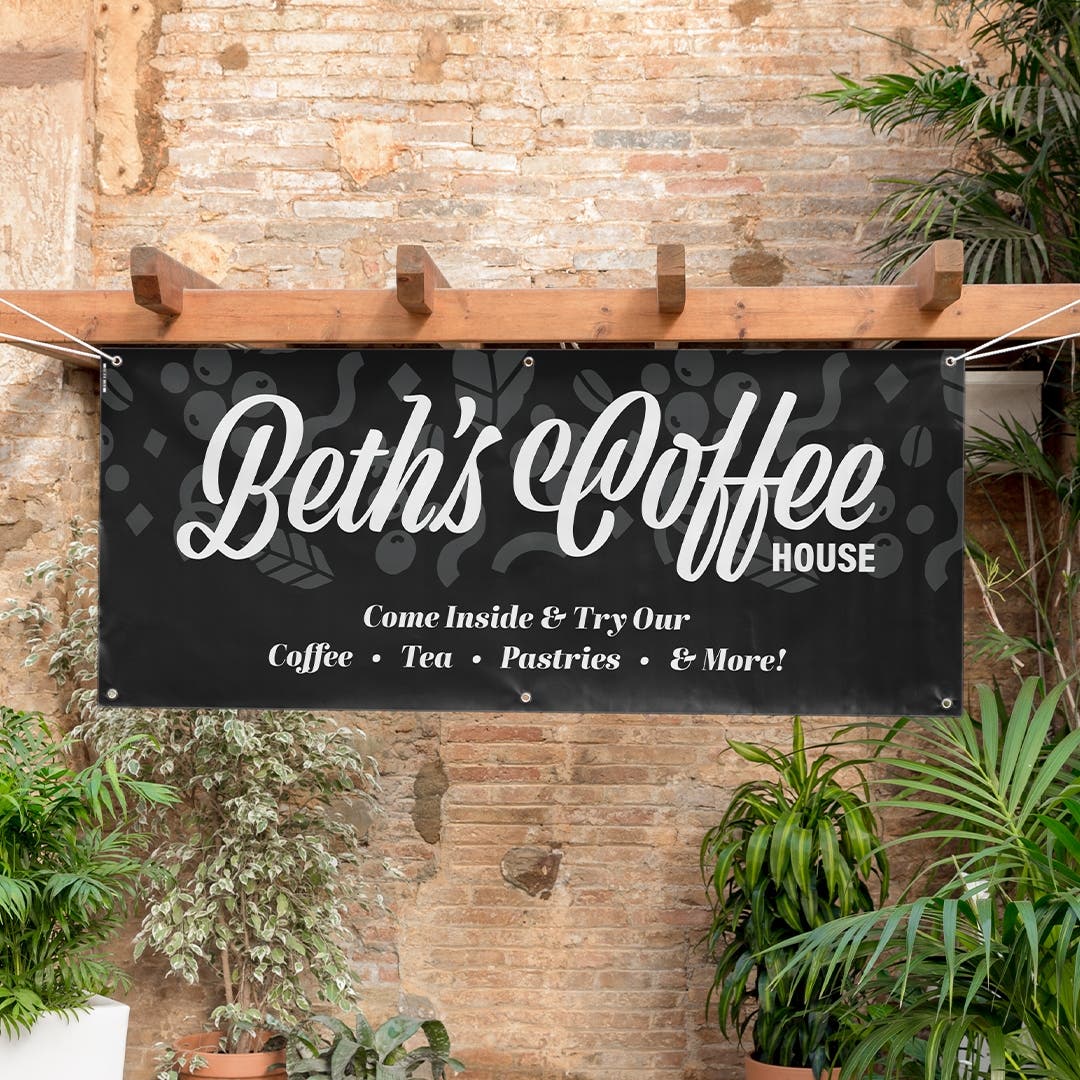
Custom banners can support a seasonal event, opening announcement, or other promotion. Select the material, finishing, and mounting method together so the design fits the actual display plan.
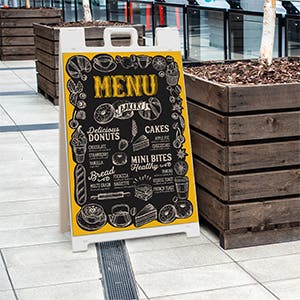
Sandwich boards for an entrance-area message
Sandwich boards offer an option for a message viewed by people approaching on foot. Confirm the insert dimensions, printed faces, and frame selection. Check what the order includes, and keep the installed display clear of the walking route.
Measure the usable space and the complete display
Record the width and height of each proposed display area. Allow for door movement, window frames, attachment points, and nearby fixtures. Measure the usable space rather than assuming the entire wall or window is available.
For a freestanding display, consider the space occupied by the frame when open. For window artwork, inspect the background behind the glass as well as the outside view. A design that looks clear on a white screen may be harder to read against merchandise or reflections.
Keep the branding consistent and the messages distinct
Use approved logos, a coordinated color palette, and clear lettering across the set. Then adapt the layout to each format. A wide banner, narrow door panel, and portrait board need different arrangements.
Give the most important wording room to stand out. Keep detailed information on signs customers can comfortably approach and read. Use original artwork, preserve logo proportions, and follow the selected template’s safe-area guidance.
Compare the designs side by side before approval. They should feel like one business while making the purpose of each sign easy to understand.
Prioritize updates around the customer experience
If you are refreshing in stages, begin with incorrect details, damaged displays, and information customers need to use the business. Then plan additional promotional pieces around the campaign calendar and available installation time.
For example, a café changing its hours could update the entrance information first, refresh its daily board message next, and prepare a banner for an upcoming event. This keeps each purchase tied to a defined need.
Keep a record of the message, product configuration, artwork version, and owner for each update. Add a review or removal date for temporary offers so they do not remain on display after the campaign ends.
Proof the details, then inspect the installed signs
Check business names, hours, contact details, offer wording, and any directional arrows against current records. Review the proof both close up and as a smaller preview. Confirm the selected size, orientation, material, finishing, and hardware before ordering.
Once installed, repeat the approach walk. Look for blocked text, glare, unclear directions, or displays competing with the main business identity. Use customer questions and staff feedback to identify what still needs improvement.
Storefront signage refresh checklist
- Each existing sign has a recorded purpose and condition.
- Outdated hours, offers, and contact details are identified.
- The selected format suits the message and environment.
- Display dimensions, surfaces, and hardware are confirmed.
- Branding is consistent across the approved artwork.
- Temporary messages have a review or removal date.
- The installed signs are checked from the customer’s approach.
Frequently asked questions
Do I need to replace all my storefront signs at once?
Start with the signs that are inaccurate, damaged, or unclear. A staged refresh can work when each update uses the same approved branding and supports a clear customer need.
Which sign format is best for a temporary promotion?
Consider the location, message, and how often it changes. Banners, selected window graphics, and sandwich-board inserts may offer suitable options. Check the individual product configuration before deciding.
Should every sign repeat the same wording?
Use consistent branding, but give each sign a purpose. A business identification sign, an hours graphic, and a promotional display can share colors and logos while providing different information.